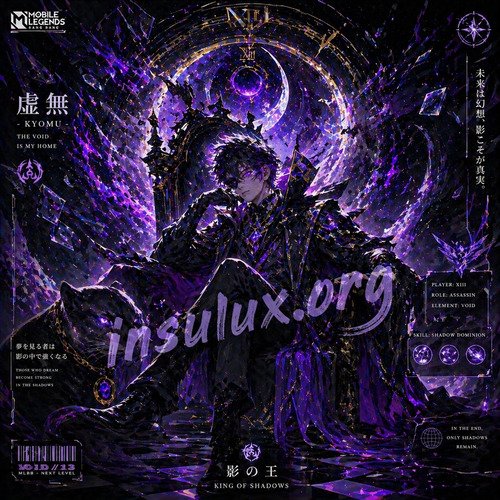
insulux.org – Mobile Legends: Bang Bang rewards players who understand that heroes are not just combat units, but interconnected systems of timing, positioning, and decision-making. Every hero carries a unique mechanical identity, yet their true strength only emerges when placed into structured gameplay scenarios involving coordination, map control, and adaptation to enemy strategy.
To progress beyond average gameplay, players must learn how heroes behave under pressure, how they interact in team fights, and how they shift in value depending on game conditions. This guide breaks down hero mastery into three advanced layers: mechanical depth, teamfight structure, and adaptive strategic thinking.
Hero Mechanics and Execution Depth
At the foundation of every strong performance lies mechanical execution. Even the best strategy fails if a player cannot properly control their hero under pressure. Mechanics determine how effectively a hero converts opportunity into impact.
Many heroes in Mobile Legends rely on precise skill sequencing to maximize damage output. The difference between average and advanced players often comes down to whether abilities are used in optimal order and timing.
A hero like Gusion exemplifies combo-based execution. His damage potential is not based on raw stats but on how efficiently players chain his dagger mechanics. A poorly timed combo results in wasted damage, while a perfect sequence can eliminate targets before they have time to react.
Understanding combo flow also includes awareness of cooldown windows and animation timing. Skilled players do not simply press skills—they structure them like a rhythm, ensuring every action contributes to maximum efficiency.
Mobility Control and Positioning Mastery
Mobility is one of the most decisive mechanical advantages in the game. Heroes that rely on movement skills require constant awareness of spacing, escape routes, and engagement angles.
A fighter like Chou demonstrates how mobility and control can define engagement outcomes. His ability to dash, reposition, and isolate targets allows him to disrupt enemy formation effectively. However, improper usage of mobility often leads to overextension and punishment.
Positioning is not static—it changes every second depending on enemy movement. High-level players continuously adjust their location to maintain both safety and threat potential.
Sustain Mechanics and Resource Management
Not all mechanics are about burst damage or mobility. Some heroes rely on sustain, shields, or regeneration mechanics to outlast opponents in prolonged fights.
A mage like Esmeralda represents sustain-based dominance. Her ability to absorb shields and convert them into survivability allows her to remain effective in extended engagements. However, success depends on timing engagements correctly and maintaining pressure without overcommitting.
Resource management also includes mana, energy, and cooldown tracking. Skilled players always monitor their internal resources to ensure they are ready for key engagements instead of being caught in vulnerable states.
Teamfight Engineering and Role Interaction Systems
Team fights in Mobile Legends are not random clashes—they are structured interactions where every role has a specific function. Understanding how heroes interact during these fights is essential for consistent success.
The beginning of a team fight is often the most important moment. A well-executed initiation can decide the outcome before the fight even fully develops.
A tank like Johnson demonstrates how initiation can shape team dynamics. His ability to engage suddenly and force enemy displacement creates chaos that can be exploited by teammates. However, initiation is not just about engaging first—it is about engaging correctly.
Poor timing leads to wasted opportunities, while perfect timing creates guaranteed advantages. High-level players constantly analyze enemy positioning before committing to engagements.
Damage Layering and Fight Progression
Team fights are structured in layers: initiation, disruption, burst, sustain, and cleanup. Each layer must be executed in sequence for maximum effectiveness.
Assassins like Gusion operate during the burst layer, eliminating key targets once crowd control has been applied. Meanwhile, fighters like Chou help maintain disruption by isolating enemies and breaking formations.
If damage is applied too early or without coordination, enemies can disengage or counterattack effectively. Proper layering ensures sustained pressure throughout the fight instead of short bursts of inefficiency.
Utility Influence and Fight Disruption
Not all impact comes from damage. Utility heroes influence fights through vision control, healing, shielding, or denial abilities that disrupt enemy plans.
A support like Diggie provides unique anti-engage utility by preventing crowd control chains from locking down teammates. This fundamentally changes how enemies approach fights, forcing them to rethink initiation strategies.
Utility heroes often determine whether fights are clean executions or chaotic exchanges. Their presence shapes enemy behavior before any skills are even used.
Beyond mechanics and team fights, the highest level of mastery comes from adaptation. Players must constantly adjust their strategy based on enemy composition, game flow, and evolving conditions.
Draft Adaptation and Counter-Composition Logic
The draft phase is the strategic foundation of every match. Heroes are selected not only for strength but for synergy and counter potential. A strong draft can simplify execution, while a weak draft forces players into constant recovery situations.
For example, a hero like Esmeralda becomes significantly more effective against shield-heavy compositions. This means her value increases depending on enemy draft, not just raw stats.
Understanding counter logic allows players to predict match difficulty before the game even begins. It also helps in identifying win conditions early, which is essential for structured gameplay.
Map Pressure and Macro Rotation Systems
Macro gameplay refers to how players control the map rather than individual fights. It includes wave management, objective control, and rotation timing.
A tank like Johnson contributes heavily to macro pressure by enabling sudden rotations and forcing enemies to respond defensively. His presence alone can shift map control dynamics, even without direct engagement.
Teams with strong macro understanding always prioritize objectives over unnecessary fights. They trade efficiently, control vision, and maintain lane pressure to force enemy reactions.
Psychological Pressure and Decision-Making Under Uncertainty
At higher levels of play, decision-making becomes psychological. Players must act with incomplete information while predicting enemy behavior and intentions.
Heroes like Chou excel in this environment because they create constant threat pressure. Even without engaging, their presence forces enemies to play cautiously, limiting their options.
Decision-making includes evaluating when to engage, when to retreat, and when to sacrifice resources for long-term advantage. High-level players consistently choose actions that maximize future positioning rather than immediate gains.
Conclusion Mobile Legends Heroes Tactical Mastery Guide: Mechanics, Teamfight Engineering, and Adaptive Decision Systems
Mobile Legends heroes are complex systems of mechanics, teamwork, and adaptation. Their effectiveness is not defined by individual strength alone, but by how well they function within structured gameplay environments.
From execution-heavy assassins like Gusion to sustain-focused mages like Esmeralda, from disruptive fighters like Chou to initiation tanks like Johnson and utility supports like Diggie, every hero contributes to a larger strategic system.
True mastery is achieved when players stop viewing heroes as individual characters and start seeing them as tools within a dynamic battlefield ecosystem. Those who understand mechanics, teamfight structure, and adaptive strategy will always perform at a higher level, because success in Mobile Legends is built not on randomness, but on controlled decision-making and intelligent execution.